PPWR – a new obligation for importers. Packaging now counts too
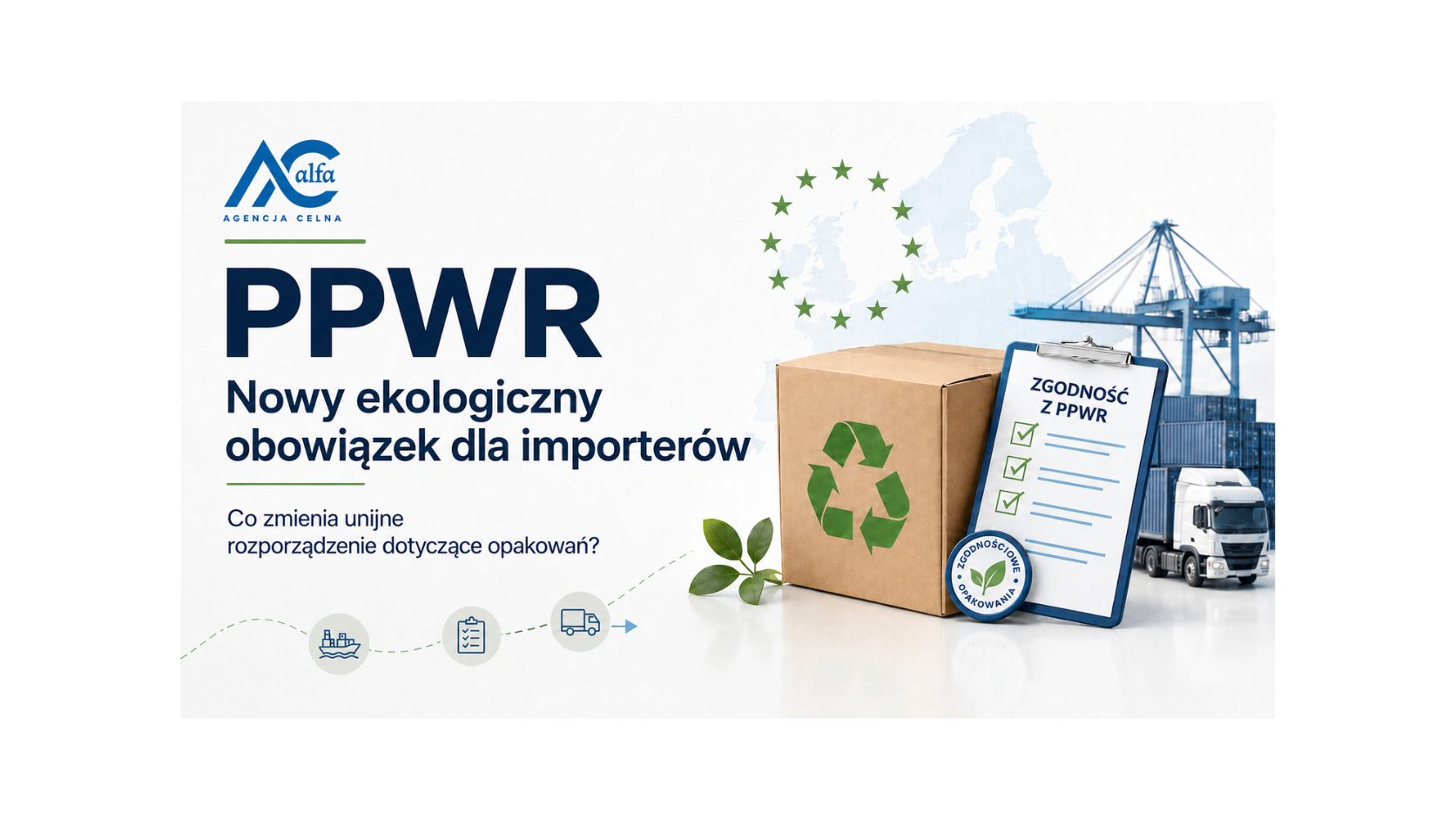
PPWR for importers is an issue that is set to become increasingly important in the near future. Do you import products from outside the European Union? Before long, it will no longer be enough simply to check whether the goods themselves meet EU requirements. The packaging in which the product arrives in the EU will also come under scrutiny.
What is PPWR?
The PPWR, or Packaging and Packaging Waste Regulation, is an EU regulation concerning packaging and packaging waste.
Its main aim is to reduce the amount of waste, excessive packaging and the use of packaging that cannot be effectively recycled. The regulations are also intended to harmonise the requirements across the European Union.
The Regulation came into force on 11 February 2025 and, in principle, will apply from 12 August 2026. However, the individual requirements will be introduced in stages.
We encourage you to watch the video in which Marcin Szreder – Director of Alfa Customs Agency – discusses the new obligations imposed on importers in connection with the PPWR

Why do the new regulations apply to importers?
The PPWR does not only cover packaging manufacturers operating within the European Union. It also applies to companies that import packaging or pre-packaged products from third countries.
In practice, this means that an importer should take an interest not only in the product itself, but also in:
- individual and bulk cartons
- with film and filling
- transport packaging
- on a pallet or in a crate
- the information on the packaging
An importer may only place packaging on the market that complies with the PPWR requirements. If the importer has reason to believe that the packaging is non-compliant, they should suspend its placing on the market until the non-compliance has been rectified.
What will the importer need to check?
Before importing goods, it is worth clarifying a few key points with the overseas supplier.
The importer should check whether the packaging has been correctly assessed for conformity, whether the required technical documentation has been prepared, and whether it bears the appropriate markings and details of the responsible parties.
The materials used to make the packaging, its recyclability and the reduction of unnecessary weight and volume will also be important. Not all of the requirements will come into force at the same time, but the direction of the changes is clear: packaging is to be simpler, easier to recycle and less harmful to the environment.
A manufacturer’s mere assurance that the packaging is „eco-friendly” may therefore not be enough. Specific information and documents confirming compliance will be required.
The problem may only arise after delivery
Let’s imagine a company that imports electronic devices from China. Each device is protected by plastic film and foam, placed in a cardboard box, and then packed into a larger collective package.
If an importer only realises, upon the goods’ arrival, that the required documentation or markings are missing, they may be forced to:
- additional labelling
- repackaging of products
- temporary suspension of sales
- to bear the costs of storage
- obtaining the missing documents from the supplier
It is therefore best to sort out any packaging-related issues before dispatch, rather than once the container is already at the port.
How can you prepare for the PPWR?
There’s no need to carry out a complex audit of the entire company straight away. To start with, it’s worth:
- List the types of packaging used for imported products.
- Ask suppliers for information regarding materials and documentation.
- Determine who is responsible for compliance and the labelling of the packaging.
- Include PPWR requirements in contracts and purchase orders.
- Draw up a procedure to be followed in the event of a non-conformity being detected.
The sooner an importer begins discussions with suppliers, the lower the risk of delays and additional costs.
It is not only the goods that must comply
The PPWR is changing the way we view imports. A product may meet all quality and technical requirements, yet there will still be a problem with bringing it to market if the packaging proves to be non-compliant.
Please contact Alfa Customs Agency
Do you import goods from outside the European Union? It is best to check the requirements for products, packaging and documentation before dispatch. This helps to minimise the risk of delays, additional storage and costly repackaging of goods once they have been delivered to Poland.
For matters relating to the preparation of the import process and customs formalities, please contact Alfa Customs Agency: 📞 +48 609 949 144